

Making Sense of Your Pet’s Heart Medications
The moment a veterinarian mentions pimobendan, furosemide, and enalapril in the same sentence, it is entirely normal to feel completely lost. A cardiac diagnosis is already an emotional moment, and a prescription list with three or four unfamiliar names on it can make the road ahead feel overwhelming before it has even begun. What actually helps in those early days is understanding what each medication does inside the body, knowing what changes to watch for at home, and knowing which signs should send you straight to the phone. When you understand the “why” behind each pill, you become a more confident caregiver, and that confidence genuinely makes a difference in your pet’s day-to-day comfort.
At Woodland Springs Veterinary Hospital in Fort Worth, cardiac care starts with getting the diagnosis right. We use in-house lab work, digital radiography, and ultrasound through our diagnostics services to build a complete picture of each patient’s heart health before recommending any treatment plan. That precision matters, because the medications that help one condition may not be appropriate for another. Contact us to establish or review a cardiac care plan for your pet.
What Type of Heart Disease Does Your Pet Actually Have?
Heart disease is not one condition. It is a category, and the specific diagnosis explains a great deal about why certain medications are prescribed and others are not.
- Mitral valve disease is the most common cardiac condition in dogs, particularly in older small-breed dogs. The valve between the heart’s left chambers gradually thickens and leaks, eventually allowing fluid to back up into the lungs. Large breed dogs can develop dilated cardiomyopathy, where the heart muscle weakens and enlarges, more commonly seen in Dobermans or dogs eating grain-free diets high in legumes.
- In cats, the most frequently diagnosed condition is hypertrophic cardiomyopathy, where the heart muscle wall thickens and the chamber becomes too stiff to fill properly. Cats can also develop dilated cardiomyopathy or restrictive cardiomyopathy, where scar tissue makes the heart wall rigid.
- Arrhythmias can occur in cats and certain dog breeds, including Boxers, who have a breed predisposition to a specific form of abnormal rhythm. Sick sinus syndrome is one type that affects the heart’s natural pacemaker and is seen more often in Schnauzers.
- Some conditions are present from birth. Congenital heart disorders vary widely in severity, and patent ductus arteriosus, a vessel that should close after birth but does not, is among the more common structural defects seen in young dogs.
The reason this matters is that a medication combination appropriate for mitral valve disease in a Cavalier King Charles Spaniel is not necessarily the right approach for a cat with hypertrophic cardiomyopathy. Diagnosis drives the prescription. We identify the specific condition first through our diagnostics services so that the treatment plan is built around what is actually happening, not a general assumption.
What Tools Do Veterinarians Use to Diagnose and Monitor Heart Disease?
How Advanced Cardiac Testing Works
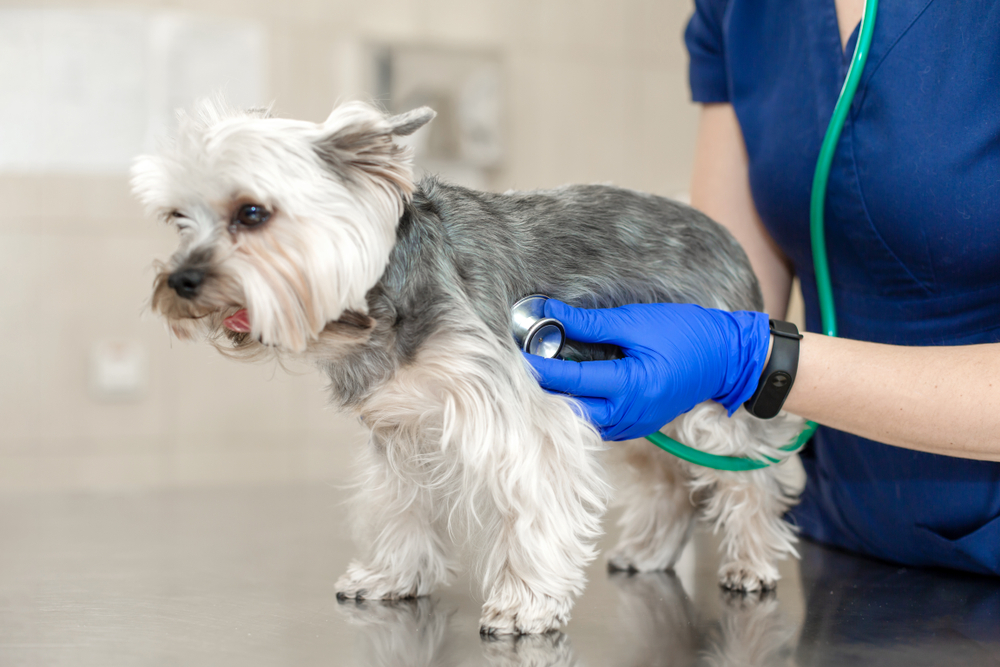
Getting a clear picture of what is happening in a pet’s heart requires several different tools, and none of them are particularly stressful for the patient. Heart murmurs detected through a stethoscope during an exam are often the first indication that something structural has changed, and tracking a murmur’s grade over time provides useful information about how quickly the disease is progressing.
Echocardiograms use ultrasound technology to visualize the heart in real time, measuring chamber dimensions, watching valve movement, and evaluating how efficiently the heart is contracting and filling. This is the single most informative cardiac test available and is essential for distinguishing between conditions that can look similar on a surface exam. Electrocardiograms record the heart’s electrical activity, identifying rhythm disturbances that affect how efficiently the heart beats. Chest radiographs show the overall size of the heart and, critically, whether fluid has begun accumulating in the lungs, which is one of the most important indicators of disease progression.
Combined with blood work and urinalysis, these tools give us a complete, individualized view of a cardiac patient’s status at diagnosis and at every subsequent recheck.
What Signs Suggest a Heart Problem in the First Place?
Recognizing Cardiac Symptoms in Dogs and Cats
Catching heart disease early, before it has progressed significantly, is one of the most impactful things you can do for a pet’s long-term comfort. The challenge is that some early signs are easy to attribute to other things, like aging or a quieter personality, when something else is actually going on.
In dogs, heart disease signs typically include a persistent soft cough, particularly at night or after lying down, lower energy during activities that previously felt easy, and reduced exercise ability that may show up as a dog lagging behind on walks, stopping sooner than usual, or simply seeming less interested in going out than before.
Cats tend to be subtler about cardiac symptoms, which is one reason their conditions are often caught at a more advanced stage. Rapid or labored breathing at rest, hiding behavior, and panting in cats are all worth taking seriously. Panting is not normal in cats the way it occasionally is in dogs, and it warrants a prompt veterinary visit whenever it occurs.
Warning Signs of Congestive Heart Failure
Congestive heart failure occurs when the heart can no longer pump effectively enough to prevent fluid from building up, typically in the lungs or abdomen. These are the signs that require immediate attention:
- Resting breathing rate consistently above 40 breaths per minute while your pet is asleep or fully relaxed
- Labored or open-mouth breathing, especially in cats
- Coughing that worsens at night or when your pet lies down
- Pale or blue gums, which indicate that oxygen is not reaching the tissues as it should
- Collapse or sudden weakness with no obvious cause
- A visibly distended abdomen from fluid accumulation
- Sudden appetite loss or unexplained weight change
Respiratory distress, meaning labored breathing, gasping, or extreme restlessness paired with abnormal breathing, is always an emergency. We see emergency cases during open hours, and for after-hours emergencies, we can direct you to local 24/7 emergency facilities. Reach us at (817) 431-3735. Do not wait on these signs.
How Do the Individual Medications Actually Work?
Pimobendan: Helping the Heart Pump More Efficiently
Pimobendan is typically the first medication added when a dog’s heart disease reaches the point where treatment is recommended. It works in two distinct ways: it helps the heart muscle contract more effectively, and it relaxes the blood vessels the heart pumps into, so blood flows out with less resistance. That combination reduces the overall workload on a heart that is already compensating for structural changes.
Starting pimobendan early, before congestive heart failure develops, has been shown to meaningfully delay that progression in dogs with mitral valve disease. Most dogs take it twice daily on an empty stomach for best absorption. You may notice easier breathing at rest, more enthusiasm on walks, and less nighttime coughing over the days and weeks after starting it, though some improvements show up more clearly on recheck testing than in day-to-day observation. Side effects are uncommon and usually mild, such as softer stools or a slightly reduced appetite, and we will walk you through what to watch for when we prescribe it.
Diuretics: Removing the Fluid That Makes Breathing Hard
When fluid accumulates in the lungs, furosemide is the medication that helps the kidneys move it out. It works by increasing urine production, which means pets on furosemide will drink and urinate noticeably more than usual. That is expected and appropriate, not a cause for concern. Relief from furosemide can begin within hours of the first dose, which is why it is often the first thing given when a pet arrives in respiratory distress.
Doses are adjusted based on disease stage and how each pet responds, ranging from once daily for mild disease to multiple times daily during active fluid accumulation. Spironolactone is sometimes added for additional fluid management using a slightly different mechanism. Because diuretics can affect kidney values and electrolyte levels over time, regular blood work helps us keep therapy both effective and safe, and we build that monitoring into your pet’s recheck schedule.
ACE Inhibitors: Reducing the Strain on an Overworked Heart
ACE inhibitors, which include medications like enalapril and benazepril, work by relaxing blood vessels and reducing the body’s tendency to retain fluid. Both effects lower the workload on the heart. They are commonly used alongside pimobendan and furosemide in dogs with heart failure, and cats may receive them when systemic hypertension (high blood pressure) is a contributing factor.
Most pets handle ACE inhibitors well, but dizziness, digestive upset, or unusual weakness are worth a prompt call. Like diuretics, they require periodic monitoring of kidney function and electrolytes to make sure the kidneys are handling the combination of medications appropriately over time.
Beta-Blockers: When the Heart Needs to Slow Down
Beta-blockers like atenolol are not used for every cardiac patient, but they are particularly valuable in specific situations: cats with hypertrophic cardiomyopathy who have a rapid or irregular heart rate, and certain pets with arrhythmias where slowing and steadying the rhythm improves overall efficiency. A heart that is beating too fast or erratically uses far more energy than it needs to, and reducing the rate in these cases allows the heart to work more sustainably.
Careful dosing matters here. Too much slowing can cause lethargy or weakness, and any new weakness or faintness during beta-blocker therapy warrants a call before the next scheduled appointment. Other rhythm-control medications may be considered if arrhythmias persist despite treatment.
Why Are Multiple Medications Necessary?
It can feel like a lot of pills, and that is a fair reaction. Heart failure does not affect one body system in isolation; it affects several simultaneously, and that is why heart disease medications are typically combined rather than used one at a time. Pimobendan helps the heart pump more effectively. Furosemide addresses the fluid that accumulates when the heart cannot keep up. ACE inhibitors reduce pressure and fluid retention from a different angle. Together, they support the multiple systems that heart failure disrupts in ways that no single medication can manage alone.
What that combination looks like also changes as the disease progresses. Early-stage disease may require only one or two medications. More advanced stages typically involve carefully coordinated combinations, with doses adjusted at each recheck based on how your pet is responding. Your observations at home, including how your pet is eating, whether their breathing seems easier, and how they do on walks, directly inform those adjustments. Questions between visits are always welcome.
What Should You Track at Home?
Consistent home monitoring gives us the information we need to make good decisions between visits. The single most important habit to build is counting resting breaths once daily while your pet is asleep or fully relaxed. Count the number of times the chest rises in 30 seconds and multiply by two. Under 30 breaths per minute is typical. Consistently above 40, or a sudden jump from your pet’s normal baseline, is worth a call to us rather than a wait-and-see approach.
Weekly weight checks on a consistent scale can catch fluid retention before it becomes symptomatic: a gain of two or more pounds in a dog, or half a pound in a cat, over just a few days may signal fluid buildup. Fresh water should always be available, since diuretics increase thirst significantly. Lethargy, vomiting, poor appetite, or unusual weakness can signal dehydration or electrolyte imbalance and warrant veterinary assessment rather than watchful waiting.
Is Exercise Still Safe for a Pet with Heart Disease?
You might be surprised to learn that yes, heart-healthy exercise is often beneficial for pets with early or well-managed heart disease. Gentle, regular activity helps maintain muscle mass, supports healthy weight, and improves quality of life for dogs who feel well enough to enjoy it. Short, leisurely walks at your dog’s own pace, calm indoor play, or gentle swimming in warm water are all appropriate for many cardiac patients. The key is letting your pet set the pace entirely and stopping at the first sign of increased breathing effort, coughing, or reluctance to continue.
What to avoid: strenuous activity, hot or humid conditions (Fort Worth summers included), and anything that causes sustained excitement or exertion. Multiple shorter sessions typically work better than one longer outing. For cats, calm, low-stimulation home environments help reduce cardiac demands. We will give you specific guidance at each recheck visit based on current medications and disease stage, since what is appropriate at one point may need to be adjusted as things change.
Frequently Asked Questions About Cardiac Medications
Why is my pet suddenly breathing faster than usual?
Faster breathing at rest, particularly during sleep, can indicate that fluid is beginning to accumulate. Count the breath rate: if it is consistently over 40 breaths per minute or noticeably higher than your pet’s normal baseline, contact us rather than waiting for the next scheduled appointment. This is exactly the kind of change we want to know about promptly.
Do cardiac medications have to be given forever?
Most of them, yes. Heart disease is a managed condition rather than a curable one, and cardiac medications keep the heart functioning as comfortably as possible over the long term. Dosing is adjusted over time based on how your pet responds, with the goal of maintaining comfort on the fewest medications needed at each stage.
What if I miss a dose?
If you remember within a few hours, go ahead and give it. If it is close to the next scheduled dose, skip it and continue the regular schedule. Do not double up unless we have specifically advised this for a particular medication. When in doubt, call us and we can walk you through it.
Can diet and exercise actually make a difference?
Yes, meaningfully so. Balanced nutrition supports overall organ function, and appropriate low-intensity activity helps maintain muscle mass and a healthy weight, both of which matter for cardiac patients. We will help you identify the right limits based on your pet’s specific condition and current medications.
A Partner in Your Pet’s Cardiac Care
Heart disease is serious, but with the right medications and a good monitoring routine, many pets live comfortably and happily for months to years beyond diagnosis. The goal is not just managing a condition but preserving quality of life, and the right combination of medications, adjusted thoughtfully over time, goes a long way toward that.
At Woodland Springs Veterinary Hospital, we believe you should walk out of every appointment understanding what each medication does, why it was chosen, and exactly what to watch for at home. No one expects you to feel fully confident after a cardiac diagnosis, but we will make sure you get there. Request an appointment to discuss a cardiac concern, or contact us at (817) 431-3735 with questions.



Leave A Comment