


It often starts with something small: your dog rolling in the grass and coming inside covered in red, itchy welts, or your cat scratching and rubbing their face after you switched their food. Most of the time these reactions stay mild, but allergic reactions in pets can also escalate quickly, and anaphylaxis, a severe reaction that causes rapid swelling, breathing difficulty, and dangerously low blood pressure, can develop within minutes of exposure.
As an AAHA-accredited hospital, Woodland Springs Veterinary Hospital follows the highest standards of care when diagnosing and treating allergic reactions at every severity level. Our team offers allergy testing and same-day urgent evaluation for acute reactions during office hours. Contact us if your pet is showing symptoms or you’d like to set up a prevention plan before allergy season ramps up in North Texas.
What Causes Allergic Reactions in Pets?
The immune system’s job is to protect from genuine threats. In allergic pets, it overreacts to substances that are actually harmless, and that overreaction produces symptoms ranging from mild skin itching to life-threatening systemic collapse.
Common allergen categories:
- Environmental allergens including pollen, mold spores, grass, and dust mites are among the most frequent triggers, particularly in spring and fall. In North Texas, cedar pollen season starts as early as December and tree pollen continues through spring, creating an extended allergy window for sensitive pets.
- Food proteins such as chicken, beef, dairy, and wheat can trigger immune reactions in susceptible animals. Food allergies can develop at any age, even in pets who have eaten the same diet for years without a problem.
- Insect bites and stings, particularly bee stings and fire ant bites common throughout the Fort Worth area, are a frequent cause of acute reactions. Flea saliva is one of the most sensitizing allergens in pets: a single bite can trigger intense, widespread itching in a flea-allergic animal.
- Medications and vaccines can also trigger reactions, ranging from mild injection-site soreness to rare but serious immune responses.
Reactions to Vaccines and Medications
Vaccine reactions are uncommon, but they do occur, and knowing what to watch for means you can act quickly if something develops.
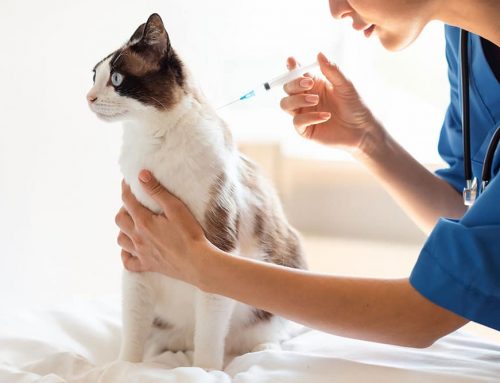
Vaccination reactions range from mild to serious. Mild responses, including lethargy, soreness at the injection site, and mild facial puffiness, are relatively common and typically resolve within a day. More concerning responses, including hives, vomiting, and facial swelling, typically appear within 30 to 60 minutes of vaccination. Anaphylaxis, the most serious reaction, can develop within minutes.
We recommend staying at the clinic for 15 to 20 minutes after vaccination, particularly for pets with a prior reaction history. For pets who have had previous vaccination reactions, we can modify protocols, including pre-medicating or splitting vaccines across separate visits, to reduce risk. Always share your pet’s complete reaction history with our team before any vaccine appointment.
Understanding the Spectrum of Reactions
From Mild Skin Reaction to Life-Threatening Emergency
Not all allergic reactions look or feel the same, and the type and timing of symptoms provide important information.
Skin reactions and contact hypersensitivity: redness, itching, and scratching that may develop into hot spots or secondary infections from self-trauma. Common in dogs exposed to grass, cleaning products, or certain grooming products. Uncomfortable and worth treating but generally not dangerous.
Hives: raised, itchy welts appearing across the skin, often developing quickly after exposure. Hives indicate a localized immune response and are uncomfortable but rarely immediately dangerous on their own. They can, however, be a warning sign that a more serious reaction is developing, particularly if they appear alongside facial swelling or behavioral changes.
Respiratory symptoms: sneezing, watery eyes, and mild coughing that typically develop gradually and respond well to standard allergy management. Cats with respiratory symptoms warrant closer monitoring because open-mouth breathing in cats is always a sign of serious distress.
Anaphylaxis in dogs and anaphylaxis in cats: a severe, whole-body reaction affecting multiple organ systems simultaneously. Blood pressure drops rapidly, airways narrow, and tissues throughout the body are deprived of adequate oxygen. Anaphylaxis can develop within minutes of exposure and is a veterinary emergency.
Warning Signs: When to Act Immediately
Know these signs. When any of them appear, call us at (817) 431-3735 and head in right away, or go directly to the nearest 24-hour emergency facility if we are not open.
Emergency signs requiring immediate veterinary care:
- Rapidly spreading facial, lip, or throat swelling
- Difficulty breathing, labored respiration, or gasping
- Open-mouth breathing in cats at any point (never normal in cats)
- Pale, white, or gray gums
- Sudden collapse or extreme weakness
- Persistent vomiting or diarrhea following allergen exposure
Signs that need same-day evaluation:
- Hives or sudden raised welts across the skin
- Facial swelling that develops after known allergen exposure
- Sudden intense itching across the body, especially with behavior changes
- Vomiting once or twice within an hour of a bee sting or vaccine
Trust your instincts. If something about what you are observing feels wrong, call us rather than waiting to see what happens. Our emergency care is available during open hours Monday through Saturday, and our team can advise on urgency by phone.
What You Can Do at Home During a Reaction
While getting your pet to veterinary care, here are the steps that help.
- Remove the suspected trigger if it is identifiable: rinse the skin with cool water if contact with a substance occurred; remove a bee stinger by scraping rather than squeezing
- Keep your pet calm and still: movement increases circulation, which can speed the distribution of allergens throughout the body
- Prevent self-trauma: if scratching or face-rubbing is intense, use an e-collar or wrap hands in a towel to prevent the damage that leads to hot spots and eye injury
- Document what you can: time of symptom onset, what your pet was doing or had contact with, how symptoms have changed, and photos of the skin changes or facial swelling
- Call ahead: letting us know what you are seeing before you arrive allows us to prepare
Do not give antihistamines or any other medication without calling first. Some human antihistamines are safe for pets at specific doses, but others are dangerous, and the right choice depends on your pet’s weight, health history, and what we already have on file.
How We Treat Allergic Reactions
Mild to Moderate Reactions
For hives, facial swelling, or mild systemic reactions caught early, treatment typically includes antihistamines to block histamine receptors, corticosteroids to reduce inflammation, monitoring for several hours to catch any progression, and follow-up guidance on what to watch for at home.
Anaphylaxis
Anaphylaxis is treated as a true emergency. Epinephrine is the first-line medication: it rapidly reverses airway narrowing and restores blood pressure. IV fluids support circulation. Oxygen supplementation addresses reduced oxygenation. Corticosteroids and antihistamines are given to prevent the secondary wave of inflammation.
One critical point: anaphylaxis can have a biphasic presentation, meaning a pet may appear to recover and then deteriorate again hours later. Monitoring after apparent recovery is essential, not optional. Hospitalization or close observation is typically recommended for confirmed anaphylaxis cases.
For pets with known severe reactions to bee or wasp stings, keeping epinephrine accessible at home is worth discussing with our team so you have a plan if exposure occurs away from the clinic.
Options for Treating Allergies in Pets
There’s rarely a single treatment that works for pets with allergies. Instead, it’s a combination of multiple methods. Getting to the root of and treating allergies is often a step-wise process:
- Treat the immediate issue: stopping the itch, treating skin infections, and starting parasite prevention
- Start a longer-term allergy relief plan: bathing regularly with the right topical therapy and using a prescription allergy medication regularly to prevent severe symptoms and infection from returning
- Find the cause of the allergy, through diet elimination trials and allergy testing, to prevent future flare-ups
Parasite Prevention
Flea allergy dermatitis is triggered by flea saliva, and in sensitized pets, a single flea bite causes intense reaction. In the Fort Worth climate where fleas are active year-round, year-round parasite prevention is essential for any allergic pet. This is not a sometimes thing for allergy patients; it is a non-negotiable part of the management plan.
Prescription Allergy Management
For pets with chronic environmental allergies, prescription therapies provide meaningful day-to-day symptom control alongside environmental management.
- Apoquel and Zenrelia target the itch pathway specifically and provide rapid relief.
- Cytopoint is an injectable antibody that blocks the itch signal for four to eight weeks per dose.
- Atopica is a daily oral immune-modulator that decreases symptoms long-term.
Our pharmacy carries Apoquel, Atopica, and Zenrelia for ongoing allergy management, and we offer Cytopoint in-hospital for patients that need long-term allergy relief.
Allergy Testing and Immunotherapy
Immunotherapy addresses the underlying immune sensitization over time through customized allergen desensitization, and is most effective when we know exactly what your pet is reacting to. We use Nextmune allergy testing to identify the specific environmental allergens driving your pet’s symptoms- using a blood sample, we can screen for reactions to dozens of regional allergens common to North Texas, including grasses, trees, molds, and dust mites.
Once we know what’s triggering your pet, we formulate a customized immunotherapy plan, available as injections or sublingual drops, that gradually desensitizes the immune system to those specific allergens. Immunotherapy is not a quick fix- most pets take six months to a year to see the full benefit- but for pets with significant environmental allergies, it’s the only option that works on the root cause rather than managing symptoms indefinitely. It’s particularly worth considering for pets who need year-round medication to stay comfortable.
Food Allergy Identification
If food allergy is suspected, elimination diet trials are the only reliable diagnostic approach. A novel or hydrolyzed protein diet is fed exclusively for 8 to 12 weeks, with no treats, flavored medications, or other food items during that period. Improvement during the trial, followed by symptom return when the original diet is reintroduced, confirms food allergy.
This process requires commitment, but it produces a clear answer that guides long-term dietary management.
Topical Therapies and Supplements
Regular grooming removes environmental allergens from the coat before they are absorbed through the skin or licked off. A simple rinse after walks, particularly during high-pollen periods, meaningfully reduces allergen load. Topical therapies for allergic skin including medicated shampoos and leave-on conditioners soothe inflammation and support the skin barrier. For some pets, topical therapy is enough. For others, it’s an add-on to other medications.
Our pharmacy carries several options for skin-supportive care:
- Epi-Soothe Shampoo, DermAllay Oatmeal Shampoo, and DermAllay Oatmeal Spray Conditioner for gentle, soothing care.
- For pets with more reactive skin, DOUXO S3 CALM Shampoo and DOUXO S3 CALM Mousse help manage inflammation and barrier function.
- Omega-3 fatty acid supplements support skin barrier function and reduce underlying inflammation. Dermoscent Essential 6 Spot-On is a topical option; browse the full range of cat skin and coat supplements and dog skin and coat supplements in our pharmacy.
- Cat skin and coat diets and dog skin and coat diets offer full nutritional skin support.
Laser Therapy
Laser therapy uses focused light energy to reduce inflammation, increase circulation, and accelerate cellular healing in damaged tissue. For allergic pets, it’s a particularly useful tool for addressing hot spots and areas of inflamed or irritated skin that have been traumatized by chronic scratching or chewing. A few sessions can meaningfully speed recovery in skin that’s slow to heal on its own, and it’s non-invasive and well-tolerated by most pets. We often recommend it as an add-on for patients dealing with recurrent hot spots or persistent skin inflammation that isn’t fully resolving with topical care alone.
Ask us what we’d recommend for your pet. Most dogs and cats do best with a multi-modal approach to allergy symptom relief, using both topical therapies as well as a prescription anti-itch medication and/or immunotherapy.

Frequently Asked Questions About Allergic Reactions
What is the difference between hives and anaphylaxis?
Hives are raised, itchy welts on the skin, typically uncomfortable but not immediately dangerous. Anaphylaxis is a severe, life-threatening, whole-body reaction causing blood pressure collapse, airway narrowing, and inadequate oxygen delivery to organs. Anaphylaxis can develop within minutes and requires emergency treatment.
When should I go directly to an emergency clinic?
If Woodland Springs is not open and your pet is showing any of these signs: rapid facial or throat swelling, breathing difficulty, open-mouth breathing (in cats), pale gums, or collapse. Do not wait to see if it improves.
Can I give my pet Benadryl at home?
Some antihistamines are safe for pets at specific doses. Others contain decongestants that are dangerous. Call us before giving anything, and if you do administer an antihistamine at home, still bring your pet in for evaluation because antihistamines alone are often insufficient for moderate to severe reactions.
How do I prevent flea-related allergic reactions?
Year-round prescription flea prevention is essential. Talk to our team about which product is most appropriate for your pet’s lifestyle and any other pets or people in the household.
Could my pet’s chronic itching be food-related?
It is possible. Food allergies typically cause non-seasonal symptoms affecting the face, ears, paws, and rear end. An elimination diet trial is the diagnostic path. Our general wellness team can help you design and support the trial.
Ready When It Matters
Allergic reactions in pets deserve prompt attention whether they look mild or severe, because mild reactions can escalate and early treatment produces faster, more complete resolution. At Woodland Springs Veterinary Hospital, our team is here to provide same-day evaluation during office hours, guide you through prevention planning, and help you build a management strategy for pets who are prone to reactions.
Contact us to get your pet on a proactive allergy management program.



Leave A Comment